A Flat Tax? Yes, But on Net Worth
72
![]() | Amazon Price: $2.49 List Price: $24.95 |
Amazon Price: $6.97 List Price: $14.95 | |
Amazon Price: $8.00 | |
![]() | Amazon Price: $19.97 List Price: $20.00 |
Amazon Price: $8.56 List Price: $15.00 | |
![]() | Amazon Price: $12.36 List Price: $22.95 |
![]() | Amazon Price: $11.69 List Price: $19.95 |
Amazon Price: $4.99 | |
![]() | Amazon Price: $9.90 List Price: $24.95 |
Poor folk don't give the rich and powerful their due.
We just kind o' keep making excuses for 'em, always thinking they must o' meant well, but they just can't get the square pegs in the round holes.
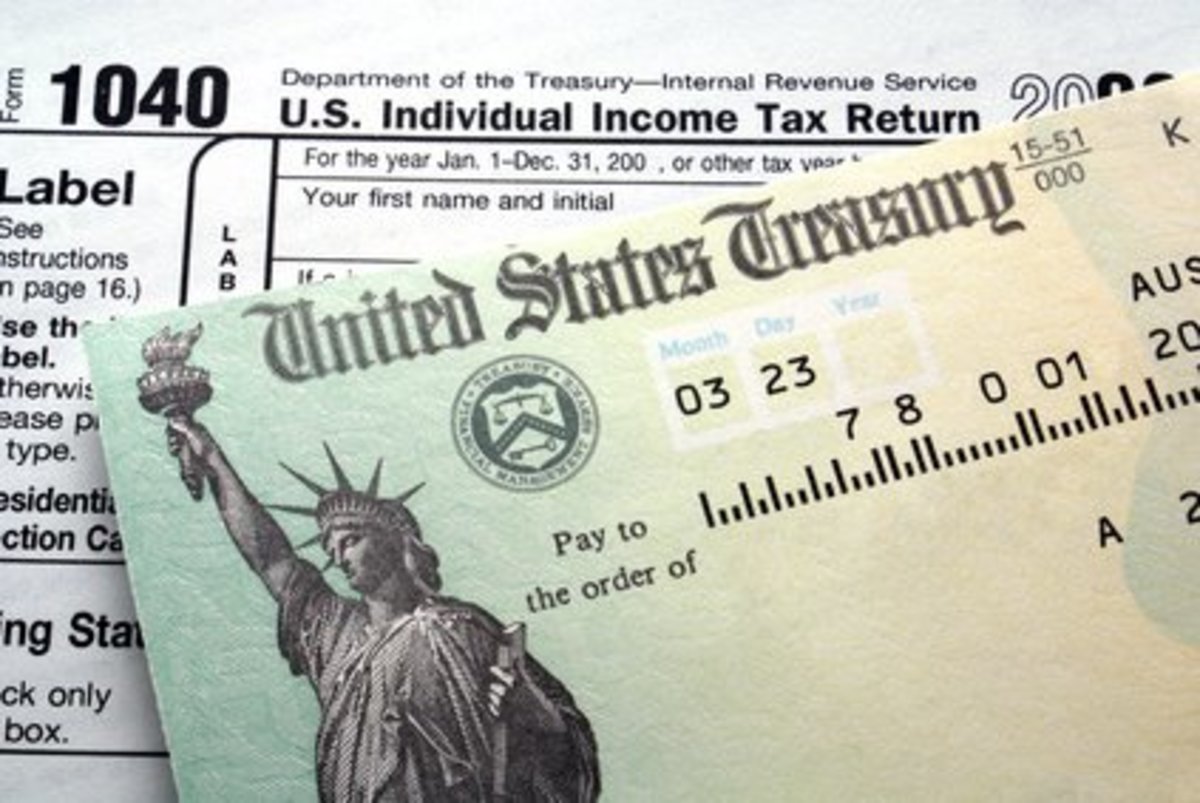
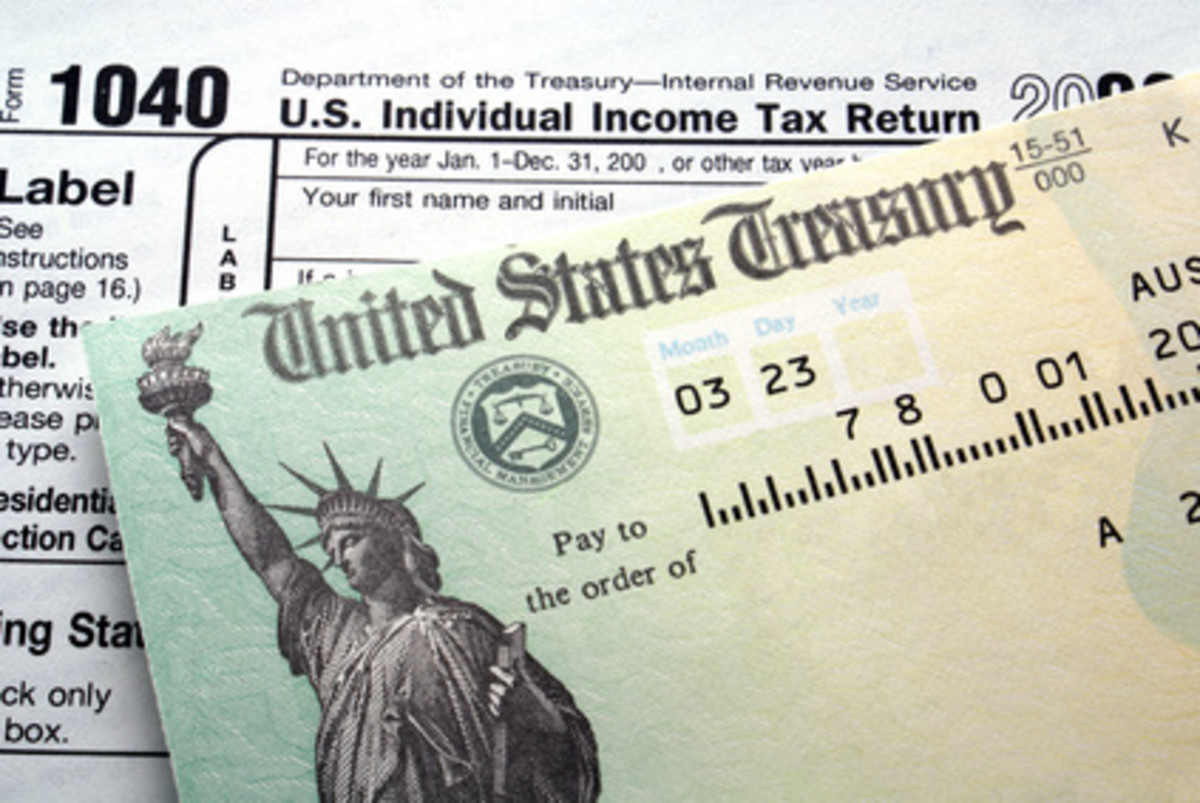
I'm only guessing, but it seems to me we all felt that very same way back when Congress first passed the income tax. It didn't hurt all that much! Then, that first itty-bitty income tax didn't seem so onerous.
But, now, today, we want to scream from the rooftops, "My taxes are too high! My taxes are too high!" We know we ought to get rid of 'em; we don't know how.
Political Groundswell for Flat Tax
Such high emotions among the country's middle class have evoked a groundswell among politicians on both sides of the political aisle in favor of a so-called flat tax. Some want a "pure" flat tax with no deductions while others offer modified versions that would retain some of the popular deductions, primarily home mortgage interest, local and state taxes, and charitable contributions.
The existing income tax is so full of holes, so unfair to so many people that it has few defenders. The question is not, "Should we deep-six the income tax?" Rather, the question is, "What kind of flat tax should we impose, and how can we change the system without causing havoc?"
Ineffective Change
Unfortunately, switching to a flat tax is akin to going on a diet and giving up chocolate ice cream, only to replace it with vanilla ice cream. It may be a big change, but to no avail.
When the government decided the country needed an inexhaustible supply of money, it had any number of options. Few poor folk could be found among the gentry in Congress, where the big decisions are made. Most were men of wealth, whether Democrat or Republican, and relied not on wages and salaries, but on dividends, interest and capital gains.
The Wealthy had a Great Idea!
So, they came up with a great idea. Tax ordinary income!
It certainly seemed reasonable to them at the time.
There was one tax, however, that no one ever discussed. In fact, no one even wanted to think about it. It would be preposterous, un-American, heresy!
That tax is a flat tax, but a flat tax, not on income, but on net worth!
The Cat's Out of the Bag!
There, I said it. The cat's out of the bag! Please don't report me to the Whitewater ... er, I mean, House Un-American Activities Committee.
Think of it, though. If Jane Doe punches holes in donuts for $15,000-a-year but hasn't got a dime in the bank, should she pay the same taxes as John Doe, who also punches holes in donuts, but has $6 million in various investments around the world?
Oh, of course, we couldn't tax net worth because it would be too hard to figure out how much everyone has stashed away -- and besides, people would cheat.
But just think of all the jobs it would create. You could keep the entire Internal Revenue Gestapo, er, Service, that is, in business, and keep the economy booming!
But us poor folk know better. We're not so dumb. Whatever the politicians decide to do, we know we're the ones who will be paying the bills.
Shorty the Barber's Wisdom
It's like Shorty the Barber of the old Amos and Andy Showonce said when asked how he figures his taxes.
"I just send them everything I make."
I wrote this column as a "My View" for The Hour newspaper of Norwalk, Conn., on Feb. 3, 1996. My opinion on taxes remains unchanged. I now write my on a wide variety of topics on HubPages. You can, too. It's easy, and free! Get paid for writing about what you love, or whatever interests you!. HubPages makes the technical part easy. Make friends and get help on its active forum. Take a quick tour to see how easy it is to get started today Click Here -- To view my HubPages Profile Click Here
Would You Favor a Flat Tax?
See results without votingCommentsLoading...
I'm in. Won't happen though. Guess which group votes down even 10% flat tax across earned and unearned? The wealthy. They don't even pay that much, they sure aren't going to for this and they own the government.
exactly.
William
At the risk of sounding too religious, I feel that a flat tax is certainly the Lords way. He requires a simple tithe of his people. That tithe is 10% of their annual increase. Neither rich nor poor are singled out, all pay the same. Is it harder for a man who is rich to pay 10%, for that amount would be great? Or, is it harder for a poor man who has very little to pay, for he needs all that he has to survive? The answer is simple, 10% is 10%. Now for the hard part, who defines what "increase" is? Ahhh, that is another one to ponder, isn't it?
Bill , going along with your chain of thought. How much taxes would the Kennedy clan and the Hollywood bunch have to pay in this total worth plan ?
My solution is replacing the income tax with a national sales tax.
The more you buy the more you pay in taxes.
There should be an exception on staples of life, whatever that means.
Get rid of the IRS and the buildings and all the books holding the millions of words necessary to interpret the tax laws. Most states already have a state sales tax, so the infrastructure is already in place.
It gives an almost immediate revenue to the country without the delays of with-holding and filing millions of pieces of tax papers.
There will always be a group of people that will sidestep the system but they are easier to track than the current income tax system.
Money would go into savings without being taxed and at some time it has to come out and get hit by the sales tax.
The government would have to downsize to a level where it works for us but not against us. The current benefit versus burden of government in this country is way on the burden side.
It is a fairer system and more productive for the country.
William,
That is why I mentioned the exceptions to the sales tax to cover the staples needed by the poor.
As to the wealthy finding loop holes, they already do that now.
The IRC is already unfriendly to the middle class.
Without the income tax deductions, people will have the freedom to spend their money without worrying about the tax consequence.
The federal sales tax shouldn't have any more or any less problems than those that already exists in the state sales tax system.
I don't agree with your statements on the poor and the wealthy. As long as there are loopholes, the advantage goes to the wealthy. Many bad decisions are made trying to use tax loopholes to avoid paying high taxes.
The tax loopholes and just the volume of tax information in the IRC is for the advantage of the wealthy. The poor and the middle class cannot take advantage of the 99% tax filler information.
KISS, keep it simple stupid, always works better than the complex and the overly complex.
I don't know why you want to continue the Income Tax and its unfair administration of taxing income. It makes no sense, but a whole lot of dollars for the government.
William --
I can see that we are on the far side of each other
This is how I see it from my vantage point;
First, the size of the 16 trillion pound gorilla is way to large for any country to support. The burden versus the benefit seesaw if way to far on the burden side.
Second, your sales tax argument is moot as to the poor because the states have the sales tax already implemented. To have the national sales tax wouldn't create any additional damage.
Third. Who determines net? Isn't that going to allow more loopholes.
Fourth. I believe that it would be simpler to define staples than to close the existing loopholes. You could provide a system similar to food stamps only you give sales tax coupons. In any case, a method could be devised to provide help for the low income families.
Fifth. The rich have to spend their wealth at some point, otherwise they are just living with a thick money mattress. The current income tax system favors the wealthy far more than the sales tax system would allow it. If you think that the same sales tax rate is an advantage to the wealthy and that because of that they don't pay enough taxes, I don't see it that way.
If you buy an item for $10 and pay 10% tax, you paid $1
If you buy an item for $100 and pay 10% tax, you paid $10
If you buy an item for $10000 and pay 10% tax, you paid $1000
I don't seen any need to distribute wealth through a progressive tax system.
That is not fair, and that is the current income tax system. The problem is that the wealthy pay high priced CPAs and Tax Attorneys to save them millions, with trust, corporate shells etc. These tax reduction and avoidance mechanisms are not usable for the poor and the middle class.
If you can get the wealthy to pay taxes at all, which they hardly do under the current system, it would be an improvement.
If you feel that you must, you can always use the luxury tax for the really extravagant products.
sixth. If you had a good thing going for you as a Congressmen and for your filthy rich friends that bought you the election, would you want some government agency running it with studies.
Why, after 45 years the cigarette companies can legally sell toxic substances with known hazardous results to people that use and those around them, still get away with just a warning label.
The tobacco lobby and the huge taxes on tobacco.
Screw the health hazard, full tax and profit ahead.
my opinion....
William,
By your own definition, your plan fails.
They always win when you don't play the game.
Sunrise 27
Why do we live in different countries?
I've often held that we could reduce income tax by increasing inheritance tax. It might discourage hoarding of assets and encourage people to help their families in their lifetimes, not from beyond the grave, which would stimulate the economy along the way.
It's not about paying one's fair share. It's about choosing WHO gets the money. For instance, a small business owner with only 5 employees will pay an accountant hundreds of $$$ a month to manipulate the books in order to appear too "poor" to pay half that amount each month in child support to an ex-wife. The rich do the same thing on a much larger scale by paying millions to accounting firms to utilize loopholes in the tax code, or to one or more greedy members of congress to create more loopholes.
If tithing to one's church is perceived as a good thing, and necessary to keep the doors open, why would paying taxes commensurate with one's income be perceived as "bad" instead of *patriotic*? Cut accountants, tax attorneys and corrupt members of Congress out of the equation and the U.S. Treasury will be swimming in cash.
A tax on net worth is a tax on savings. Three people with the same income, one spends it all and has none left at the end of the year, a second goes into debt and lives in a palace driving a fancy car that is way beyond his means. The third saves it all, eating only berries and nuts that he gathered himself and sleeping under a bridge. At the end of the year, the first person has a net worth of zero, the second person has a net worth that is negative and the third one, who is very frugal, has a positive net worth. Why would you want to take his money and give it to the other two?
William, why do you think a flat tax on net worth would apply only to "the filthy rich"? It would apply to everyone with a positive net worth, no matter how small, but not to people with a negative net worth, no matter how big!
Someone living in a palace but who owes more than he owns would get off scott free. A person of modest means who owns his house debt free and has a small amount of money in the bank would be taxed.
Don't you know people who are debt free but not rich? Talk to them.
I don't know people who live on berries and nuts, but I do know people who never buy anything unless they have the cash.
William, it seems as if we are speaking at cross purposes. We may not actually disagree with each other, but we don't seem to be using our words the same way. So let me explain what I think a flat tax on net worth means, and then you can correct me if you meant something else.
Net worth means adding up all your assets and then subtracting all your debts. So, if you have a million dollars in assets, but a million dollars plus one dollar in debt, you have a negative net worth.
How many people do I know who live in palaces but have a negative net worth? Quite a lot, depending on your definition of a palace. In today's America, almost all the people with really nice houses in nice neighborhoods, from those who live in Beverly Hills to those in less posh locations, carry a mortgage, and put down only a fraction of the cost of the house. They live as if they were rich, but their net worth shows they are not in the black. Most people in fancy houses would not end up paying your net worth tax.
Now for the definition of the flat tax: it means the percentage does not change regardless of how little or how much money someone has.
This means that a person with only one hundred dollars to his name would end up paying ten of them to the government if the flat tax is ten percent. Don't you see this would penalize everyone, rich or poor, who didn't go into debt? Can't you also see that going into debt would be a legal way to evade the tax?
I thought of this idea a few weeks ago and still don't see why it is bad. You are probably coming from it as a progressive but I lean more libertarian and still think is a good idea. In my opinion the main purpose of government is to defend property rights. The people with more assets are using more of this service than people without so it makes sense that the asset holders should pay more.
But you would have to couple this with a tax on any currency leaving the country to prevent asset holders from storing their wealth overseas as a tax avoidance.
I'm absolutely in agreement and have made a net worth tax the cornerstone of a comprehensive tax reform proposal.
Any solution to the deficit and tax reform misses the mark unless it addresses this shameful fact: Billionaire Warren Buffett pays 11% total (federal, state, local, corporate) taxes on $8 billion annual investment gains while a single minimum wage worker pays 30% total taxes on her $14,500 annual salary (http://fairsharetaxes.org). The recent tax deal amounts to $74,000 to each top 2% household compared to $5200 for an average bottom 98% household.
The favored tax treatment for wealthy investors started by Reagan 30 years ago led to the the share of the nation's wealth held by the top 1% of households jumping from 22 to 40%. It also led to investment bubbles, a 25% drop in our GDP growth over 30 years, and thus our last two recessions (in which everyone - except the rich who benefited from the tax breaks - risks losing their jobs, homes and pensions).
See http://fairsharetaxes.org/ProposedReform.aspx for a truly fair, economy-fixing, nation-saving tax reform proposal, that would slash the deficit and save middle-class households thousands of dollars each year.
I had the same thought. Netherlands has a wealth tax. We have property tax, which is a wealth tax. There is nothing illogical about it. What is illogical is somehow claiming national sales tax is any more "fair" than income, when middle-class and working poor must have far more of their wealth allocated as income coming in and purchases/sales going out, getting taxed on both ends. When a wealthy person has far smaller of their wealth living expenses, child care, income, necessity. Again they disproportionate dodge pain and suffering of taxes. Consider, if I can only save 5% of my income, like many Americans, I am spending 95% of my income --- I will be flat taxed on 95% of my income. Compared to a wealthy family, saving 50% or 90% of their income. They only subject to 1/2 to 1/10 of flat tax I am. And they have the comfort and luxury of still building their nest egg fortune. Fair? Not Fair.
A similar argument from my facebook page:
Another graphic example of why taxing net worth is the only sane policy:


Ralph Deeds Level 6 Commenter 4 years ago
You're on the right track. Forbes is lightweight.